Summary:
You had the tree taken down. Maybe you even had the stump ground. The yard looks cleaner, the eyesore is gone — and then, a few months later, something’s off. The driveway is starting to lift. There’s a soft patch in the lawn that won’t go away. Or worse, you’re seeing green shoots poking up right where the tree used to be.
Grinding solves the visible problem. What it doesn’t always solve is the underground one. In Nassau County, where homes are older, lots are tight, and the infrastructure running beneath your yard has been there since the 1950s, what’s left below the surface can matter a lot.
Stump Grinding vs. Tree Root Removal: What's Actually the Difference?
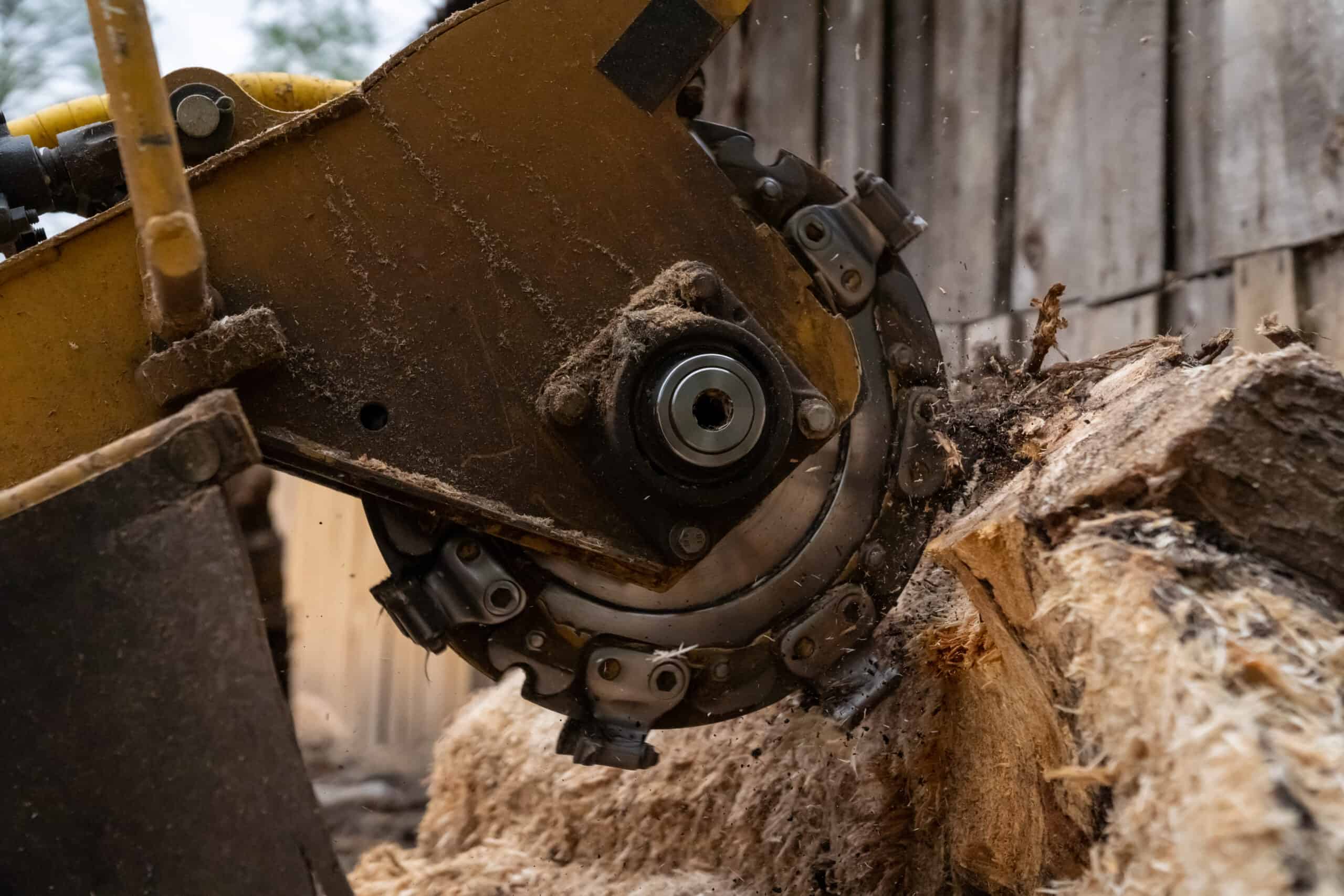
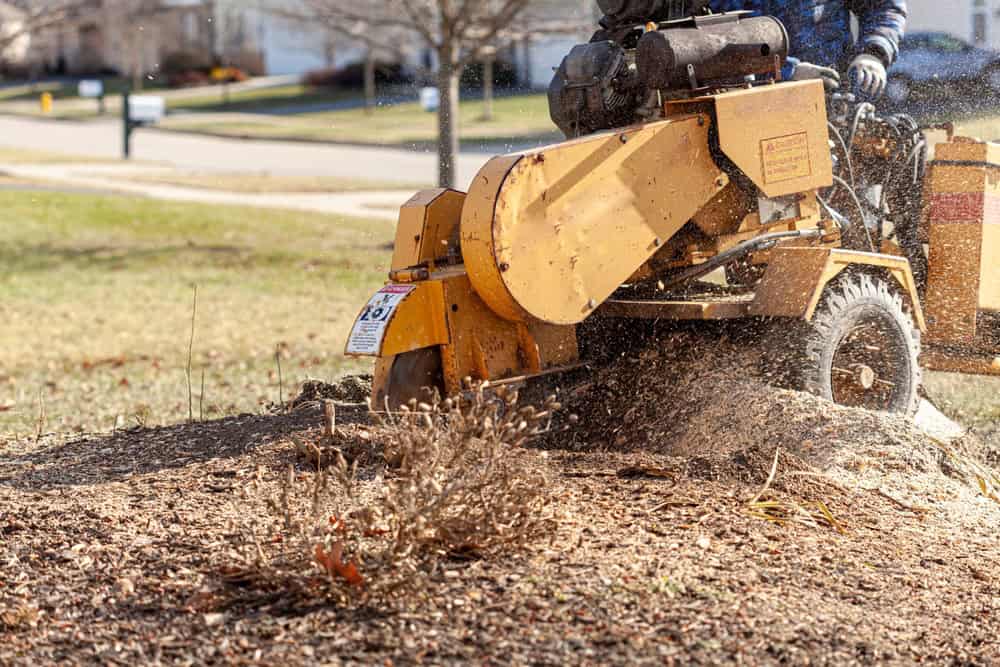
Stump grinding uses a machine to shred the visible stump down to wood chips, typically a few inches below the soil line. It’s fast, relatively affordable, and it takes care of the part of the tree you can actually see. What it doesn’t do is touch the root system spreading outward underground.
Full tree root removal goes further. It involves excavating the area around the stump — typically three to eight feet out from the trunk — and physically extracting the root ball and the major lateral roots. It takes longer, it’s more labor-intensive, and it disrupts more of the yard. But it leaves the ground genuinely clear.
For most Nassau County homeowners, grinding is the right call. The question is whether your situation is one of the exceptions — and that’s what the rest of this post is here to help you figure out.
What Happens to Tree Roots After Grinding?
After a stump is ground down, the root system left behind doesn’t just sit there quietly. It decomposes — but that process takes years, sometimes decades, depending on the species and the conditions in your soil. During that time, a few things can happen that are worth understanding before you decide grinding is enough.
The roots continue to take up space underground. As they break down, they create voids in the soil. Those voids cause settling — the kind that shows up as uneven pavement, soft spots in the lawn, or subtle shifts in the ground near your foundation. This is especially relevant in Nassau County, where homes sit on older concrete driveways and walkways that were already laid close to the tree’s root zone.
Some species don’t stop growing after grinding. Certain trees — including a number of species common to Long Island — maintain living root systems even after the trunk is removed. They send up new shoots from the surviving lateral roots, sometimes weeks after the stump was ground. If you’ve seen this happen, it’s not a fluke. It’s the tree trying to come back, and grinding the stump again won’t stop it. The root system is still alive and still working.
There’s also the question of what those roots were doing before the tree came down. Tree roots follow water, and in Nassau County’s aging suburban infrastructure, that often means they’ve already found their way into cracked sewer lines, drainage pipes, or the soil immediately surrounding a foundation. Grinding the stump doesn’t reverse that. The roots that infiltrated a pipe are still there, still blocking flow, still causing the backup you might be blaming on something else.
None of this means grinding was the wrong choice. In most cases, it’s perfectly fine. But if you’re experiencing any of these issues after a grind, the root system is the likely explanation — and full removal may be the only way to actually resolve it.
When Does Full Tree Root Removal Actually Make Sense?
There are a handful of situations where grinding simply won’t get the job done, and it’s worth knowing what they are before you commit to one approach or the other.
The clearest case is construction. If you’re planning to pour a new driveway, lay a patio, install a pool, or add onto your home, a root system left underground is a problem waiting to happen. Concrete poured over decaying roots will eventually crack and heave as the roots break down and the soil settles beneath it. If you have a contractor scheduled and a root system in the footprint, full removal isn’t optional — it’s a prerequisite.
Replanting is another situation where grinding falls short. Stump removal gives you genuinely usable ground for a new tree, a garden bed, or fresh sod. Grinding leaves enough root mass underground that new plantings often struggle to establish — especially if the remaining roots are still decomposing and competing for moisture and nutrients in the soil.
Persistent regrowth is the most frustrating one. If you’ve already had a tree ground and you’re still seeing new sprouts emerging from the lawn, the root system is still alive. Grinding again will buy you time, but it won’t stop the cycle. The only permanent solution is to get the roots out.
Finally, there’s proximity to infrastructure. In Nassau County’s denser neighborhoods — places like Uniondale, Mineola, Garden City, and the older residential blocks throughout Hempstead — homes sit on tight lots with sewer lines, water mains, and utility connections running close to the surface. If the tree that was removed was large, mature, and planted anywhere near your home’s utilities, having a certified arborist assess what the root system was doing underground is worth the time before you assume grinding resolved everything.
Bush Removal in Nassau County: The Root Problem Nobody Talks About
Tree stumps get most of the attention in conversations about root removal, but they’re not the only source of the problem. Old foundation plantings — hollies, forsythias, arborvitae, and overgrown rhododendrons — are quietly responsible for a lot of the same issues, and most homeowners don’t realize it until they try to replace them.
If you’ve ever cut back or removed an overgrown shrub and found that the roots seem to go on forever, that’s not your imagination. Deep-rooted shrub species can anchor themselves just as stubbornly as small trees, and their root systems can extend well beyond the visible plant — particularly when they’ve been in place for decades, which is common in Nassau County’s older housing stock.
Why Old Foundation Shrubs Are Harder to Remove Than They Look
Nassau County’s postwar housing boom — the Levittowns, the Cape Cods, the split-levels built throughout the late 1940s and 1950s — came with landscaping to match. Foundation plantings were standard. Hollies went in along the front of the house. Arborvitae lined the property edges. Forsythia filled the corners. And in many cases, those same plants are still there, 60 or 70 years later, with root systems that have had decades to entrench themselves in the soil directly adjacent to the foundation.
Cutting the plant back to the ground doesn’t solve the root problem. The roots are still there, still drawing moisture from the soil, still occupying the ground you need for new plantings or drainage improvements. When those roots are within a few feet of your foundation — which they often are with foundation plantings, by definition — the way they interact with soil moisture can affect the stability of the ground around your home over time.
Manual removal is harder than it sounds for mature, deep-rooted shrubs. What looks like a manageable job with a shovel often turns into a half-day project with a stump grinder, an excavator, or both. Attempting to dig out a large, established holly or arborvitae close to the foundation without the right equipment risks disturbing the soil in ways that can create drainage problems or expose the foundation to more direct contact with the elements.
Professional bush removal — the kind that actually extracts the root system rather than just cutting the plant back — is the only way to get the ground genuinely clear for replanting or renovation. It’s more involved than a simple trim or a surface-level cut, but it’s the difference between solving the problem and deferring it.
Tree and Shrub Trimming: When It's Maintenance vs. When It's a Warning Sign
Not every overgrown shrub needs to come out. Regular tree and shrub trimming is one of the most effective ways to keep root systems in check over time — because a plant that’s being actively managed above ground is generally putting less energy into expanding underground. Consistent pruning redirects growth, keeps the plant healthier, and reduces the long-term likelihood that you’ll end up with a root system that’s outgrown its space.
That said, there are signs during a trimming visit that suggest a plant has already crossed the line from “manageable” to “needs to come out.” If a shrub is sending up suckers from the base at an unusual rate, that’s the plant compensating for stress — often a sign the root system is under pressure or the plant is in decline. If the growth pattern is heavily lopsided, pushing hard in one direction toward the house or toward a neighboring structure, the root system is likely following the same path. If the plant has been cut back repeatedly over the years and keeps bouncing back to the same size, the root mass underground has probably grown to match.
A good trimming visit isn’t just about aesthetics. It’s also an opportunity to assess whether the plant is still worth maintaining or whether removal and root extraction would serve your Nassau County property better in the long run. That’s a judgment call that’s easier to make with a trained eye on-site than from a photo or a phone call.
Not Sure If Grinding Was Enough? Here's What to Do Next
The honest takeaway here is that grinding is the right answer for most homeowners — but not all of them. If you’re dealing with a cracked driveway, new sprouts where a tree used to be, a drainage problem that started after a removal, or a construction project that’s about to run into an old root system, those are signs that what’s underground still needs attention.
The same goes for old foundation shrubs. If you’ve been cutting them back for years and the problem keeps coming back, the roots are the reason.
The best first step isn’t committing to a service — it’s getting someone on-site who can actually see what you’re dealing with. We’ve been working in Nassau County for more than 20 years, our arborists are ISA-certified, and we’re licensed and fully insured. We offer free on-site inspections and written estimates with no surprises. If you want a clear answer about whether grinding was enough — or whether your shrubs need more than a trim — reach out to Long Island Best Tree Service, Inc. and we’ll come take a look.