Summary:
You had the tree taken down. The crew did their job, cleaned up the debris, and drove away. And now there’s a stump sitting in the middle of your yard that nobody mentioned was going to be a separate conversation. It happens constantly across Nassau County — and it leaves a lot of homeowners in a frustrating in-between: the tree is gone, but the job doesn’t feel finished. This guide is here to close that gap. We’ll walk you through how stump grinding works, what it actually costs in Nassau County’s market, and how to make sure the job gets done right the first time.
What Is Stump Grinding and How Does the Process Work?
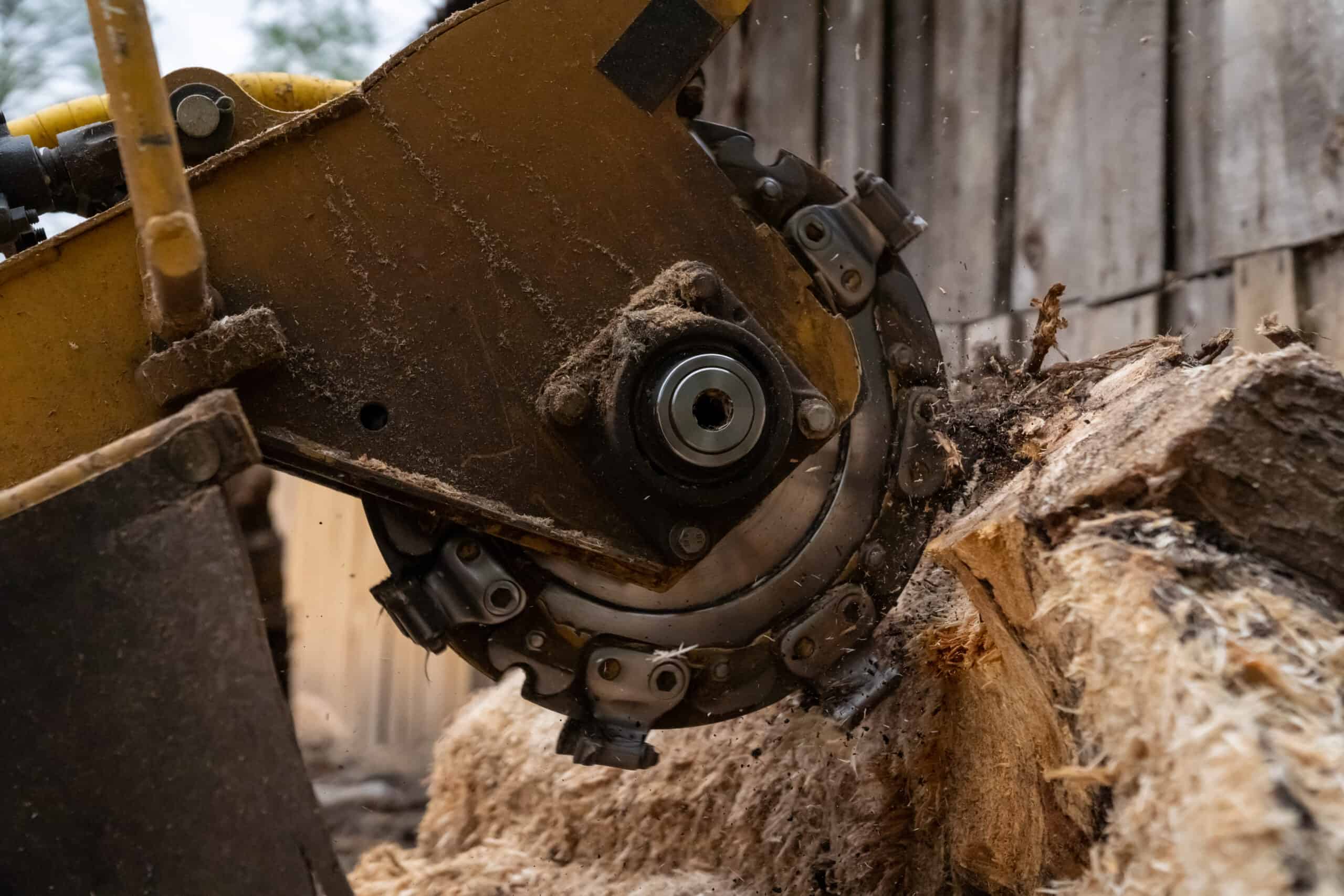
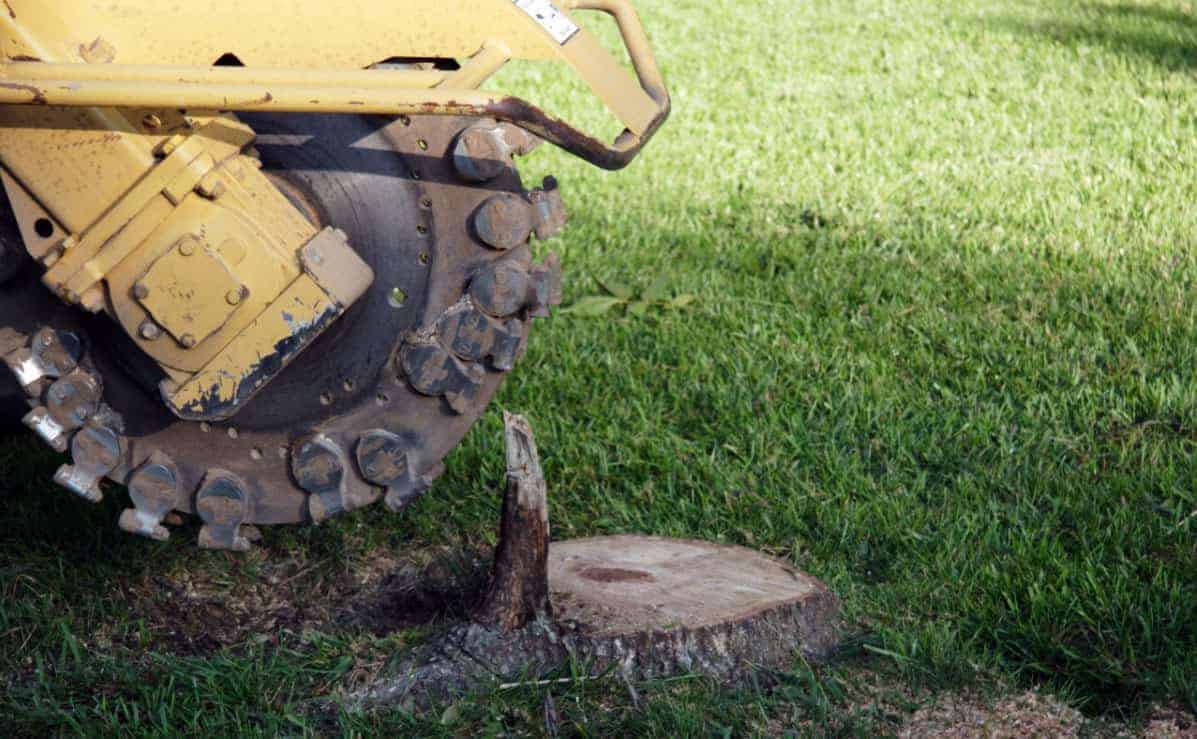
Stump grinding is the most common way to deal with a leftover tree stump. A machine with a rotating cutting head — essentially a heavy-duty wheel lined with carbide teeth — grinds the stump down in passes, reducing it to wood chips and sawdust. The grinder works through the stump and into the soil below it, leaving nothing visible above grade. The whole process typically takes anywhere from 15 minutes to a couple of hours depending on the size of the stump, the species of tree, and how accessible the spot is.
What you’re left with is a shallow depression filled with wood chip material. That material can be spread around your yard as mulch, used in garden beds, or hauled away entirely — that’s a conversation worth having with your contractor before the job starts, not after.
How Deep Does a Stump Grinder Actually Go?
This is one of the more important questions to ask, and most homeowners don’t think to bring it up until it becomes a problem later. Standard professional grinding goes to somewhere between 4 and 12 inches below the soil line. The depth that’s right for you depends entirely on what you plan to do with the space afterward.
If you just want grass to grow back over the spot, 4 to 6 inches below grade is usually sufficient. The wood chips get raked in, topsoil goes over the top, and you seed it. Done. But if you’re planning to plant a new tree, put in a shrub, install pavers, or do any kind of construction — a pool, an addition, a driveway extension — you need to go deeper. Six to 12 inches clears enough material to give roots or a foundation something clean to work with.
Here’s where Nassau County adds a layer of complexity that doesn’t apply everywhere. The county’s residential lots — most of them built out during the post-war suburban boom of the 1940s through the 1960s — are laced with underground infrastructure. Gas lines, water mains, irrigation systems, electrical conduits, cable and telecom lines run beneath nearly every yard in Hempstead, Garden City, Levittown, Rockville Centre, and the rest of Nassau County. Before any grinding starts, New York State law requires a call to 811 — Dig Safely NY — so utilities can be marked. This isn’t optional, and it isn’t a formality. Hitting an unmarked line mid-job creates a genuine safety hazard and puts the legal liability squarely on whoever is operating the machine.
We handle the 811 call as a standard part of every job. If you’re talking to someone who doesn’t mention it, that’s worth noting.
Does Stump Grinding Remove the Roots Too?
This is probably the most common misconception about the process, and it’s worth being direct about: stump grinding removes the stump and the surface root structure immediately around it, but it does not pull out the deep root system. The roots that run laterally through your soil — sometimes extending well beyond the tree’s original canopy — are left in place. They’ll decay naturally over time, but that process takes years.
For most homeowners, this isn’t a problem. The roots aren’t going to cause structural damage once the tree is gone and the stump has been ground. They don’t grow. They just slowly break down. But if you have a specific situation — a root that’s been lifting your driveway, pushing against a foundation, or running into a neighboring property — that’s a different conversation. Surface root removal is a separate scope of work, and it’s something to discuss before the job starts rather than after the grinder is already on-site.
Species matters here too. Norway maple, which is extremely common across Nassau County and has been classified as an invasive species in New York, is known for aggressive surface roots that spread wide and shallow. Pin oak, another staple of Long Island’s suburban canopy, has dense, hard wood that takes more time and more machine power to get through. These aren’t reasons to avoid grinding — they’re just reasons why an accurate estimate requires someone who’s actually looked at the stump, not just taken your word for its size over the phone.
Root removal as a standalone service, or as an add-on to a grinding job, is something we handle regularly. If you’re not sure what your situation calls for, the right move is an on-site look before any work begins.
Stump Grinding vs. Stump Removal: Which One Do You Actually Need?
These two terms get used interchangeably, but they describe very different scopes of work — and very different price points. Stump grinding leaves the root system in the ground and reduces the stump itself to chips. Stump removal means excavating the entire root ball, pulling it out of the ground, hauling it away, and backfilling the hole. It’s more thorough, but it’s also significantly more invasive and more expensive — typically two to three times the cost of grinding for the same stump.
For the vast majority of residential situations across Nassau County, grinding is the right call. It’s faster, it’s less disruptive to the surrounding yard, and it leaves the space ready for whatever you’re planning next. Full removal makes more sense when you’re doing deep foundation work or when the root system itself is the problem, not just the stump.
Pricing for stump grinding varies more than most homeowners expect, and the range is wide enough that a quote without context is hard to evaluate. The most common pricing model in this industry is per diameter inch — typically $2 to $5 per inch measured at the base of the stump. Most contractors also charge a minimum callout fee in the range of $100 to $150 regardless of the stump’s size, which covers the cost of mobilizing equipment to your property.
For a standard residential stump in Nassau County, most homeowners are looking at somewhere between $150 and $400. Larger stumps, stumps with extensive surface roots, stumps in tight spaces that require a smaller machine or extra maneuvering — those can push into the $400 to $800 range or beyond. Nassau County’s labor costs and the overhead of operating in a dense suburban market mean pricing here runs higher than national averages.
Hardwood species like oak and maple cost more to grind than softwoods because the wood is denser and harder on the equipment. Older, partially rotted stumps are often quicker and cheaper to grind than fresh ones for the same reason — the wood has already started to break down. Access matters too: if your stump is in a tight backyard with a narrow gate, that affects which machine can get in and how long the job takes. And if you have multiple stumps, we price the job differently than we would for a single stump — the mobilization cost gets spread across the whole job, which usually works in your favor.
The most important thing to know about pricing is what’s included. Does the quote cover cleanup and hauling of the wood chips, or just the grinding itself? Is backfill included? What about surface root work? Getting a clear, written answer to those questions before the job starts is how you avoid surprises when the invoice comes.
Why Leaving a Stump in Place Costs You More Than You Think
It’s tempting to leave a stump alone, especially if it’s not immediately in the way. But a stump sitting in a Nassau County yard isn’t just an eyesore — it’s an active problem that tends to get more expensive the longer you wait on it.
The most significant risk is pests. A decaying stump is an ideal environment for termites and carpenter ants. They don’t stay in the stump. Once a colony establishes itself in a rotting wood source in your yard, it has a natural path toward your home’s structure — and that’s a different kind of problem entirely, one that involves an exterminator and potentially a contractor. Nassau County homes, most of which were built decades ago with wood framing throughout, are particularly vulnerable to this pattern.
There’s also the practical side. A stump sitting below mowing height is a blade hazard every time you cut the grass. A stump that’s partially hidden by overgrowth is a tripping hazard, which creates genuine liability on your property. And if you have any plans to improve your yard — landscaping, a patio, a fence, an addition, a pool — a stump in the wrong place stops that project before it starts. Nassau County’s active residential renovation market means a lot of homeowners discover this the hard way when a contractor shows up to start a job and tells them the stump has to go first.
Natural decay is always an option in the sense that it will eventually happen. But it takes 10 to 15 years for a stump to fully break down on its own, and the decomposition process is not clean or quiet — it’s slow, it attracts insects, and it leaves an uneven depression in the ground when it finally collapses. Grinding takes a couple of hours and leaves the space genuinely usable.
How to Choose a Stump Grinding Contractor in Nassau County
The most important thing you can do before hiring anyone is ask for a written estimate. Not a number on a business card, not a verbal quote over the phone — a written scope that tells you exactly what’s included, what the price is, and what happens to the debris. A contractor who can’t or won’t provide that is telling you something important about how the job will go.
Beyond that, the basics matter: licensed, insured, and experienced with the specific conditions you’re dealing with. ISA Certified Arborists have passed a rigorous credentialing process and carry verifiable credentials — that’s a meaningful signal in a market where anyone with a truck and a rented grinder can call themselves a tree service . And whoever you hire should be handling the 811 utility marking call before any grinding starts. That’s not negotiable in New York State.
We’ve been serving Nassau County for more than 20 years. If you’ve got a stump and you’re ready to get it handled the right way, Long Island Best Tree Service, Inc. is happy to take a look and give you a straight answer on what it’ll take — no pressure, no surprises.