Summary:
Most homeowners searching for land clearing help aren’t developers. They’re Nassau County residents who need trees removed before a pool goes in, want to clear out an overgrown corner of their property, or are still dealing with the aftermath of a bad storm. The problem is that “land clearing” means different things to different contractors — and the quotes you get back often look nothing alike because they’re not quoting the same scope. We’ll walk you through what land clearing actually includes, what it realistically costs on Long Island, and — critically — what Nassau County’s permit rules actually require before you start.
What Lot Clearing Services Actually Include (and What They Don't)
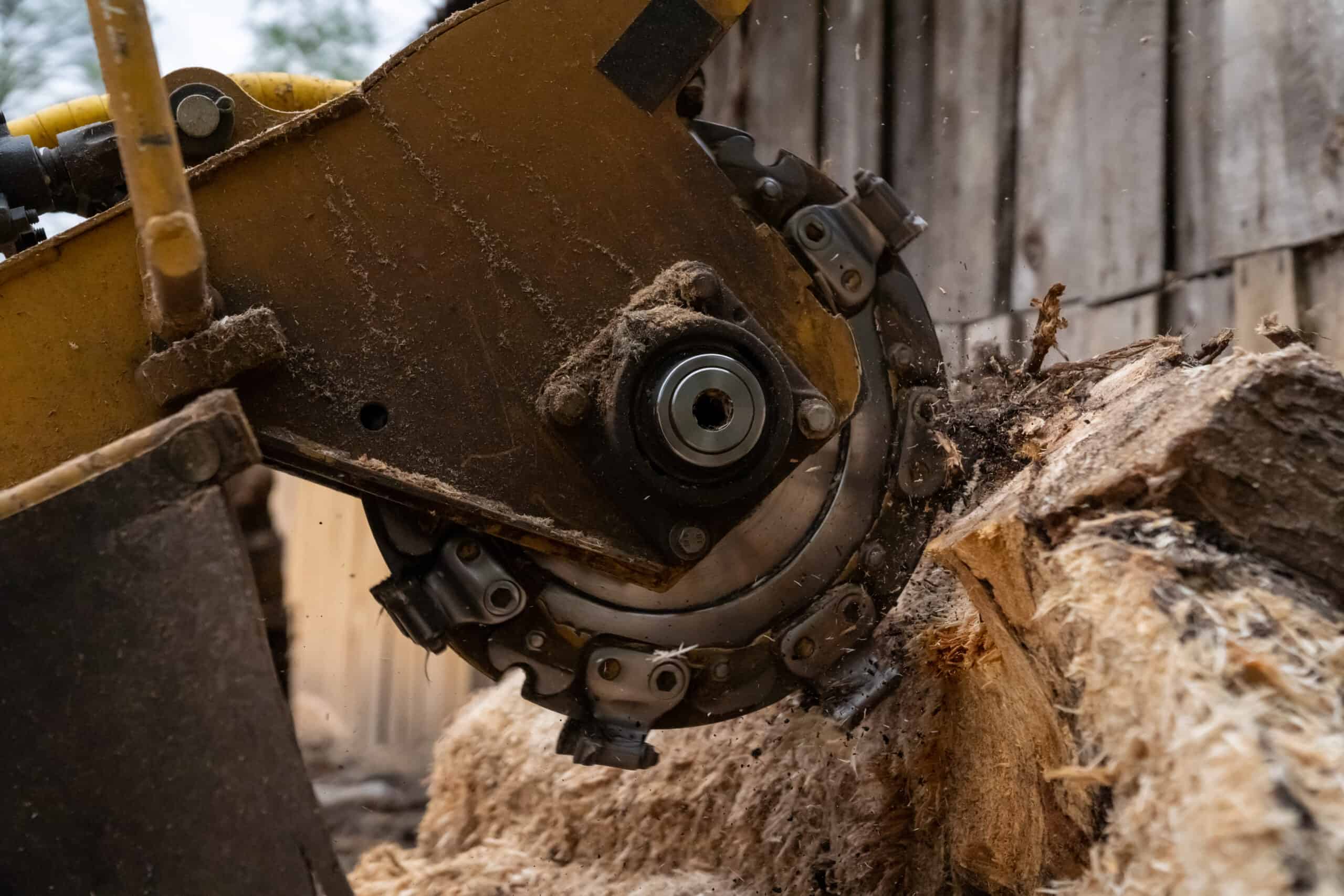
Land clearing and tree removal are not the same thing. Tree removal takes down a specific tree. Land clearing is the full scope — felling trees, grinding stumps, clearing brush and shrubs, removing vines and ground cover, hauling debris off the property, and leaving the site in a condition where your next contractor can actually work. That’s the complete picture when a job is quoted properly.
What often isn’t included — and where quotes start to diverge — is grading, topsoil stripping, rock removal, and invasive species remediation. If your Nassau County lot has Japanese knotweed or porcelain-berry (both documented on Long Island properties), that’s typically a separate line item, not something buried in a standard clearing quote. Knowing this upfront is the difference between a quote that holds and one that doubles by the time the crew leaves.
Tree Clearing Contractors: What to Look for Before You Hire
The biggest mistake Nassau County homeowners make when hiring for land clearing is treating all contractors as interchangeable. They’re not — and the differences matter more here than in most home services.
First, licensing and insurance aren’t optional. Land clearing involves heavy equipment operating close to structures, utility lines, and property boundaries. General liability insurance and workers’ compensation coverage protect you if something goes wrong. Any legitimate contractor should hand over certificates before work begins, not after you ask twice.
Second, look for ISA Certified Arborists on staff. The ISA credential — issued by the International Society of Arboriculture — requires a minimum of three years of full-time field experience, a 200-question exam with a 76% passing threshold, and ongoing continuing education. It’s not easy to earn, and it’s not a rubber stamp. A certified arborist on your job isn’t just a technical credential — it’s someone who can assess which trees are hazardous, identify what’s worth preserving, and advise you on permit requirements before a problem becomes a fine.
Third, ask specifically what the quote includes. Does stump grinding come with it, or is that separate? Does debris hauling mean everything leaves the property, or does it mean the brush gets piled at the curb? Does the crew handle invasive species, or will you be left with knotweed root systems that’ll grow back by spring? Getting clear answers to these questions before signing anything is the single most effective way to avoid a surprise invoice.
Experience with Nassau County’s specific conditions also matters. The county’s high coastal water table, mature post-WWII tree stock, and dense suburban lot sizes create clearing challenges that a crew primarily working in Suffolk County or the outer boroughs may not have encountered the same way. Twenty-plus years of local work means something when the terrain, the soil, and the permit landscape are all factors.
How Much Does Land Clearing Cost on Long Island?
Cost is where most homeowners feel the most lost — and understandably so. The national range for land clearing runs from $1,200 to $8,000 per acre, which is nearly useless as a planning number. On Long Island, and particularly in Nassau County, the more relevant benchmarks are per-square-foot and small-lot minimums.
For lot preparation work, expect roughly $1.18 to $2.00 per square foot. On lots under a quarter acre — which describes a large portion of Nassau County’s south shore and central county neighborhoods — most contractors have a job minimum in the range of $1,000 regardless of acreage. That’s not a markup; it’s the cost of mobilizing equipment, crew, and disposal for any job below a certain size.
Vegetation density is the biggest cost variable. Light brush and small trees run around $2,000 per acre. Medium growth climbs to roughly $3,500 per acre. Dense, mature woodland — the kind you find on older North Shore properties in Oyster Bay or North Hempstead — can exceed $5,000 per acre once stump grinding and debris hauling are factored in. Individual tree removal, when quoted separately, typically runs $400 to $1,200 per tree depending on size, species, and proximity to structures.
One factor Nassau County homeowners often overlook: timing. Winter and early spring tend to bring lower rates from clearing contractors, since demand drops off between storm season and spring construction. If your project isn’t time-sensitive, scheduling in the off-season can meaningfully reduce the cost. If you do have a hard deadline — a building permit expiration, a contractor scheduled to break ground — factor that into your planning and get quotes early.
Land Clearing Contractors and Nassau County Permit Rules
This is the part of the conversation most homeowners wish someone had explained before they started. Nassau County doesn’t have a single, unified tree ordinance — it has three towns (the Town of Hempstead, the Town of North Hempstead, and the Town of Oyster Bay), two cities, and dozens of incorporated villages, each with its own rules. What triggers a permit in Garden City may differ from what triggers one in Manhasset or Oyster Bay Cove.
The permit question isn’t academic. Fines for unpermitted tree removal in Nassau County can reach $10,000 or more depending on the species and size of the trees involved. A stop-work order mid-project costs you time and potentially your contractor’s schedule. Getting the permit question answered before anyone shows up with a chainsaw is not optional.
Do You Need a Permit for Land Clearing in Nassau County?
The short answer is: probably, depending on what you’re doing and where you live. The longer answer requires knowing your specific municipality’s rules, which is exactly why working with a contractor who understands Nassau County’s permit landscape — not just tree service in general — matters.
Here’s what applies broadly across Nassau County. Removing three or more mature trees as part of a new home build, pool installation, or addition typically requires both a tree permit and a building permit. Some Nassau County villages set the permit trigger as low as disturbing more than 50 square feet of vegetation. Projects that disturb natural areas greater than five acres require review at both the Nassau County level and by the New York State Department of Environmental Conservation. Most residential Nassau County lots won’t hit that threshold, but larger North Shore properties and commercial sites can.
Nassau County’s high coastal water table adds another layer. Removing significant tree cover — especially near wetland buffers or drainage areas — can trigger stormwater management permit requirements because mature trees play an active role in absorbing runoff. This is particularly relevant for south shore communities and waterfront properties along the Sound.
The practical takeaway: don’t assume that because it’s your property, no permit is required. And don’t rely on a contractor who shrugs off the permit question. A certified arborist who knows Nassau County’s regulations can tell you, before the first tree comes down, whether you need a permit, which municipality to file with, and what the process looks like. That’s the kind of local knowledge that prevents a $10,000 fine from turning a straightforward clearing project into a costly headache.
What Nassau County Homeowners Are Actually Clearing Land For
Most of the land clearing content you’ll find online is written for developers and large-scale construction projects. That’s not who’s actually searching for land clearing help in Nassau County most of the time.
The typical residential scenario here looks more like this: a homeowner in Levittown wants to remove a tree line along the back of their property to make room for a pool. A family in Roslyn is finally doing the garage addition they’ve been planning for years and needs to clear a stand of mature oaks before the foundation can be poured. A homeowner in Merrick is dealing with three storm-damaged trees that came down in a nor’easter and needs everything removed and the lot cleaned up before the insurance adjuster comes back.
These aren’t developers. They’re not clearing acres of woodland. They’re Nassau County homeowners who need a specific area of their property cleared, cleaned, and ready — without the job dragging on for weeks, without surprise charges at the end, and without a permit violation they didn’t know was coming.
That’s actually the most important thing to understand about land clearing on Long Island: the service itself is straightforward when it’s done by a crew that knows what they’re doing. Tree removal, stump grinding , brush clearing, debris hauled off your property — it’s not complicated work when the right equipment and the right experience are behind it. What makes it complicated is when the scope isn’t defined upfront, when permits aren’t addressed before work begins, or when a homeowner is left with a half-cleared lot and a contractor who’s already moved on.
Nassau County’s older housing stock — much of it built during the post-WWII suburban boom of the 1940s and ’50s — means a lot of properties have mature trees that have reached the end of their lifespan or started posing real hazard risks. When a tree is compromised, clearing it promptly and doing it right protects the property, the structure, and the people living there.
Hiring a Land Clearing Service in Nassau County: What to Take Away
Land clearing on Long Island isn’t complicated — but it does require the right questions asked before anyone starts. Know what your quote includes. Understand whether your project triggers a permit under your municipality’s rules. Make sure the contractor you hire is licensed, insured, and familiar with Nassau County’s specific conditions, not just tree service in general.
The cost variables are real, but they’re not unpredictable once you understand what drives them — lot size, vegetation density, stump grinding, debris hauling, and whether invasive species are in the mix. Get a written, itemized estimate before you commit to anything.
If you’re in Nassau County and ready to get a clear picture of what your project involves and what it will cost, Long Island Best Tree Service, Inc. offers free, no-obligation on-site estimates with no hidden fees — and the local experience to answer the permit question before it becomes a problem.