Summary:
Most Nassau County homeowners don’t think too hard about who grinds their stump. The tree is down, the stump is sitting there, and you just want it gone. So you get a couple of quotes, maybe pick the most responsive one, and move on. That’s how it usually goes — and most of the time, it works out fine. But when it doesn’t, it doesn’t just fail quietly. It fails in ways that cost real money and create real headaches. This guide is about knowing what to look for before you hand over the job — so you don’t end up on the wrong side of a situation you didn’t see coming.
What to Verify Before Hiring Any Stump Removal Contractors in Nassau County
There’s no shortage of stump grinding contractors across Long Island. Some are established companies with decades of experience and proper credentials. Others are individuals with a rented machine, a magnetic sign on their truck, and no insurance to speak of. From the curb, they can look identical — same equipment, same confident pitch, similar pricing. The difference only becomes obvious when something goes wrong.
Before anyone sets foot on your property, there are two things you need to verify in writing: general liability insurance and workers’ compensation coverage. Not just a verbal assurance — actual documentation. In New York State, if a contractor’s worker is injured on your property and that contractor doesn’t carry workers’ comp, you can be held personally liable for their medical expenses and lost wages. Your homeowner’s insurance may not cover it, especially if they determine you knowingly hired someone without proper coverage.
That’s not hypothetical. It’s a real exposure that Nassau County homeowners face, particularly given the high property values here — the median home value in Nassau County sits around $684,700. You have real assets on the line. The cost of verifying insurance before a job starts is zero. The cost of skipping that step can be substantial.
How to Actually Confirm a Stump Grinding Contractor's Insurance Is Real
Here’s something most people don’t know: fraudulent insurance certificates exist. A contractor can hand you a certificate of insurance that looks completely legitimate — carrier name, policy number, coverage amounts — and it can still be fake, expired, or tied to a policy that lapsed months ago. Asking for the certificate is a good first step, but it’s not enough on its own.
The only way to actually confirm coverage is to call the insurance carrier directly. Use the phone number printed on the certificate — not one you find online, in case the document itself has been altered — and ask them to confirm that the policy is active, that the premiums are current, and that the coverage amounts match what’s listed. It takes five minutes. Most legitimate contractors won’t blink when you tell them you’re going to verify. The ones who get defensive or try to talk you out of it are telling you something important.
You want to confirm two separate policies: general liability and workers’ compensation. General liability covers damage to your property — if the grinder takes out your irrigation line, your fence, or your driveway. Workers’ comp covers the crew if someone gets hurt on the job. Both matter. A contractor who carries one but not the other is still leaving you exposed.
New York State doesn’t require a specific tree service contractor license at the state level, which means the phrase “licensed and insured” gets used loosely in this industry. What actually matters is verifiable insurance, a real business registration, and a track record you can check. Don’t let confident language on a website substitute for documentation in your hand.
Some Nassau County townships — including Hempstead and Oyster Bay — require permits for certain tree work. It’s worth a quick call to your town before scheduling anything, just to make sure you’re not creating a compliance issue you didn’t anticipate.
Tree Stump Removal Contractors: The Grinding Depth Problem Nobody Talks About
Most homeowners assume that if the stump looks gone, the job was done right. It’s a reasonable assumption — but it’s often wrong. There’s a meaningful difference between a stump that’s been ground flush with the surface and one that’s been ground 6 to 12 inches below grade, which is the standard for a properly completed job.
When a stump is only ground to surface level, the root system below stays largely intact. That means regrowth is likely. It means the area can’t be properly replanted or sodded. And it means you may be calling a contractor back in a year to redo work you already paid for. Cut-rate operators — particularly those working with underpowered rented equipment — often grind just deep enough to make the job look finished without actually completing it to a professional standard.
This matters especially in Nassau County, where a significant portion of the housing stock dates back to the Levittown era — homes built between 1947 and 1951, which means the trees on those properties are often 70 years old or more. A 70-year-old oak or maple doesn’t have a small, simple root system. It has dense hardwood and deep roots that require real machine power and real experience to grind properly. A rented residential grinder isn’t built for that job. A professional commercial-grade machine is.
Before you hire anyone, ask them directly: how deep do you grind, and what does a completed job look like? A contractor who knows what they’re doing will answer that question without hesitation. Someone who gets vague or evasive is worth walking away from. The right answer is 6 to 12 inches below grade, with the resulting wood chips either removed or left as mulch — your call, agreed upon before work starts.
Underground utilities are another critical consideration. Nassau County’s dense suburban lots are full of irrigation systems, gas lines, cable lines, and PSEG infrastructure running through the ground. A professional contractor checks for underground utilities before grinding — not after. Hitting a line mid-job is an expensive problem that a qualified crew avoids by doing the pre-work properly.
Stump Removal Contractors and the Low-Bid Trap in Nassau County
Price is usually the first thing people compare when they’re getting quotes for stump grinding. That’s understandable — it’s the most visible number. But in Nassau County, where the local market has a real range of operators from fully credentialed companies to weekend-only crews, price can be a misleading signal in both directions.
For a typical residential stump on a Nassau County property, a legitimate quote from a professional contractor generally runs between $150 and $400. Larger stumps, complex access situations, or dense hardwood species like oak and maple push that higher — sometimes $400 to $800 or more. When a bid comes in significantly below that range, something is usually missing: insurance, proper equipment, experience, or some combination of all three.
The gap between a legitimate quote and a rock-bottom bid isn’t profit margin. It’s the cost of running a real business — carrying insurance, maintaining commercial-grade equipment, paying trained crews. When that cost disappears from the quote, it doesn’t disappear from the job. It just gets transferred to you if something goes wrong.
Red Flags That Should Stop You From Hiring a Stump Grinding Contractor
Some warning signs are obvious in hindsight but easy to miss in the moment, especially when someone is personable and their price sounds good. Here’s what to watch for before you commit to anyone.
The first is reluctance to provide a written estimate. A verbal quote is not a contract. It has no scope, no accountability, and no recourse if the job ends up costing more than what was discussed or if the work is incomplete. Any contractor worth hiring will put the scope and price in writing without being asked twice. If they push back on that, treat it as a signal.
The second is an inability — or unwillingness — to show proof of insurance on request. You’re not being difficult by asking. You’re protecting yourself, as any informed homeowner should. A legitimate contractor will have that documentation ready. Someone who doesn’t carry proper coverage will find reasons to avoid the conversation.
The third is a pattern of poor follow-through. If a contractor ghosts you after giving a quote, shows up late without communication, or is consistently hard to reach, that behavior doesn’t improve once the job starts. Reliability is one of the most consistent predictors of a good outcome — and one of the most consistent complaints when things go wrong. Nassau County homeowners who’ve been burned by contractors tend to cite this one first: “I got a quote and never heard from them again.”
Finally, watch for scope that expands once work begins. If the price you were quoted starts climbing after the crew arrives — without a clear, agreed-upon reason tied to something genuinely unforeseen — that’s a pattern that legitimate companies don’t engage in. Transparent pricing means the number you’re quoted is the number you pay.
What a Good Stump Grinding Contractor Actually Looks Like
It helps to know what you’re looking for, not just what to avoid. A contractor who does this right will give you a written estimate that spells out exactly what’s included — grinding depth, cleanup of wood chips, whether the resulting material stays or gets hauled away. They’ll have proof of both general liability and workers’ compensation insurance ready to share, and they won’t hesitate if you say you’re going to call the carrier to verify.
They’ll do a proper site assessment before any work begins — checking for underground utilities, noting proximity to structures, fences, and driveways, and identifying anything that could complicate the job. On Nassau County properties, that pre-job walk matters more than it might in other markets. The density here is real: lots are smaller, structures are closer together, and the underground infrastructure is more complex than what you’d find in a rural setting.
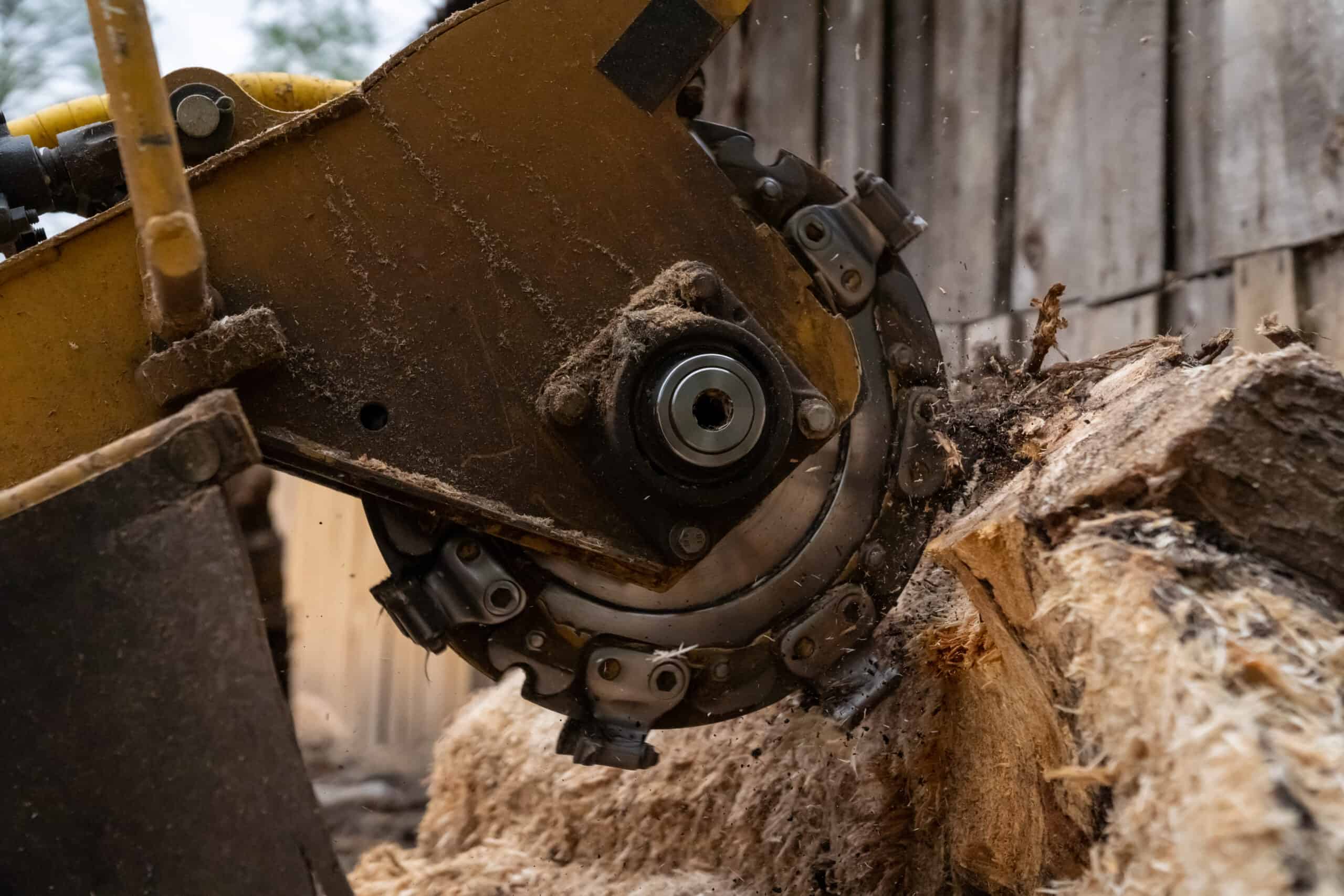
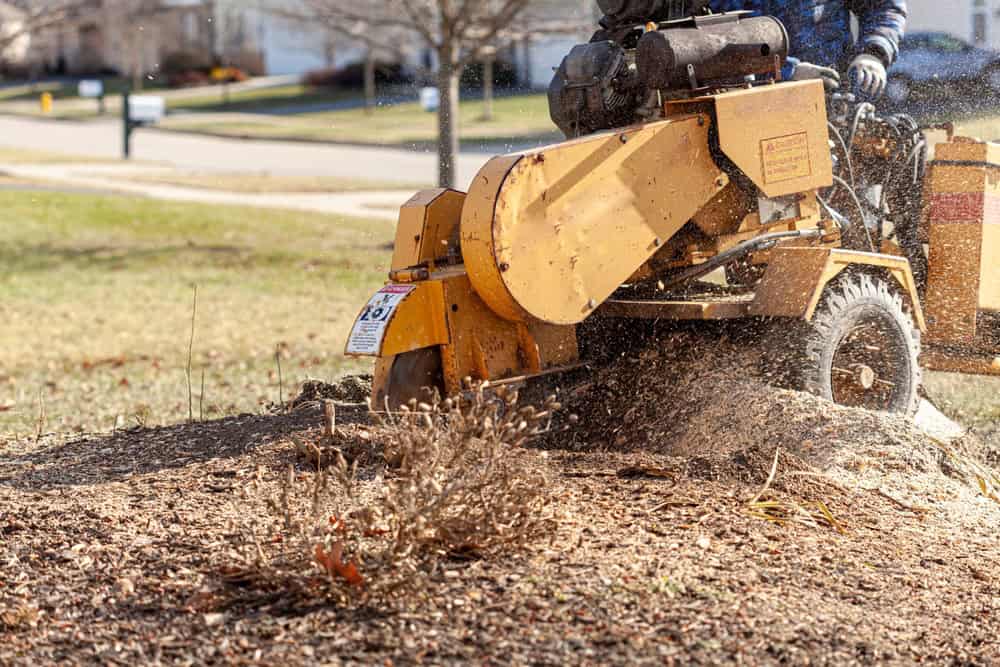
A good contractor will also be honest about the difference between stump grinding and full stump removal. Grinding reduces the stump to below grade using a machine, leaving the deeper root system to break down naturally over time. Removal extracts the entire root ball — more disruptive, more labor-intensive, and more expensive. For most residential applications in Nassau County, grinding is the right call. But a contractor who explains the distinction and lets you decide is more trustworthy than one who pushes you toward the more expensive option without context.
Experience matters here too, and not just as a marketing line. The older hardwood stumps common on Nassau County properties — the oaks and maples that have been growing since the Levittown era — are genuinely harder to grind than younger, softer wood. They require the right equipment and the experience to use it correctly. Twenty-plus years of working on Long Island properties means you’ve seen those stumps before. You know what they take. That’s not something you can replicate with a rented machine and a weekend’s worth of practice.
How to Choose the Right Stump Grinding Contractor for Your Nassau County Property
The short version: verify insurance in writing, get a written estimate with clear scope, ask how deep they grind, and pay attention to how they communicate before the job starts. Those four things will filter out most of the contractors you shouldn’t hire and point you toward the ones who will actually do the job right.
Nassau County is a market where property values are high, lots are dense, and the trees are old. That combination means stump grinding here carries more complexity — and more risk — than it does in a lot of other places. The contractors who understand that show it in how they operate: the questions they ask, the documentation they provide, and the way they treat your property from start to finish.
If you’re ready to get a straight answer and a written quote with no surprises, we at Long Island Best Tree Service, Inc. have been doing this work across Nassau County for over 20 years. Reach out by call or text at 516-903-0730 — we offer free estimates, and the price we quote is the price you pay.