Summary:
Most Nassau County homeowners think about their trees twice a year — when something falls, or when spring arrives and they notice the damage winter left behind. By then, the window for the most important tree care work has already closed.
Fall is the critical season. Not because of aesthetics, but because of what’s coming. Between October and April, Long Island gets hit with nor’easters, ice storms, and coastal wind events that put enormous stress on trees that were never professionally assessed. If you’re searching for tree care services near me right now, you’re ahead of most of your neighbors — and this guide will tell you exactly what to do with that head start.
Tree Maintenance Near Me: Why Fall Is the Most Important Window for Nassau County Homeowners
Here’s something most tree companies won’t tell you upfront: fall tree maintenance isn’t just about tidying up before winter. It’s about identifying and addressing structural problems before the first major storm turns them into emergencies.
Nassau County’s residential canopy is dominated by oaks, maples, and tulip poplars that were planted during the post-war suburban boom — the same era that produced Levittown. Those trees are now 60 to 80 years old. They’re massive, they’re beautiful, and many of them have never been structurally assessed. When a nor’easter rolls through with 60 mph coastal gusts, those are the trees that fail first.
The fall window — roughly September through mid-November — is when that assessment needs to happen. After that, the ground freezes, scheduling gets tight, and any work that didn’t get done waits until spring. That’s a full winter of exposure for trees that may already have issues you can’t see from the ground.
What Does a Fall Tree Inspection Actually Look For?
A lot of homeowners assume that if a tree looks healthy — green leaves, no visible cracks — it’s fine. That assumption is responsible for a significant portion of storm damage claims in Nassau County every year. Visual health does not equal structural integrity. Internal decay, compromised root systems, and weak branch unions are invisible from your driveway.
During a fall inspection, we’re looking for things like deadwood in the upper canopy — branches that are already dead and will be the first to come down when ice accumulates. A single inch of ice coating a mature tree’s canopy can add thousands of pounds of weight to the branch structure. That’s weight the tree was never designed to carry, and deadwood is where it gives first.
We’re also looking at the base of the tree. Mushrooms or fungal growth at the root flare are a warning sign of internal decay that may not be visible anywhere else. Cracks in the main trunk, especially vertical ones, can indicate structural failure under load. Co-dominant stems — two trunks growing from the same point — form weak unions that split under snow and ice. Bradford pear trees, which are extremely common in Nassau County street plantings, are notorious for exactly this kind of failure.
Then there’s the root zone. Long Island’s sandy glacial soil drains nutrients faster than inland clay-rich soils, which means root systems here are often under more stress than they appear. Trees in sandy soil are also less anchored, which raises the wind-throw risk during coastal storms. A proper fall inspection accounts for all of this — not just what’s visible above ground.
The goal isn’t to scare you into unnecessary work. It’s to give you an honest picture of what your trees actually need before you’re dealing with it in the middle of a storm.
The Fall Deadlines Most Nassau County Homeowners Don't Know About
There are three specific tree care tasks that have hard cutoff dates in Nassau County — and most homeowners aren’t aware of any of them until they’ve already missed the window.
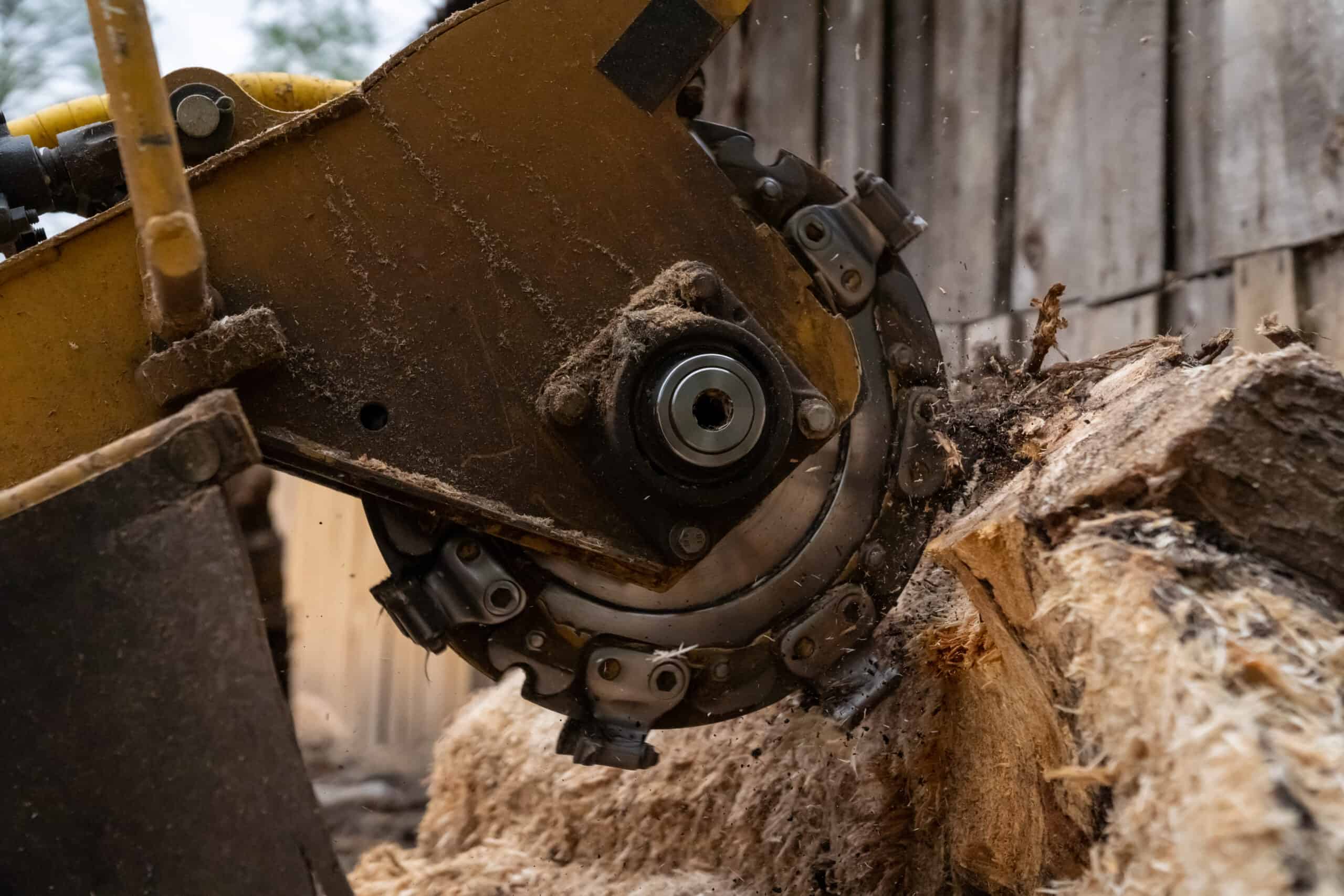
The first is stump grinding . Once the ground freezes — typically around mid-November on Long Island — stump grinding equipment can’t effectively access the root system. If you have a stump sitting in your yard right now, fall is the last practical opportunity to remove it before spring. It’s not just an eyesore issue. Stumps attract wood-boring insects, create tripping hazards, and can interfere with new planting or lawn work you might want to do in the spring.
The second is deep root fertilization. Nassau County’s sandy soil drains nutrients before root systems can fully absorb them, which means trees here benefit significantly from supplemental fertilization. That window closes around the same time as stump grinding — mid-November, before the ground freezes and the root system goes dormant. Missing it means waiting until next fall.
The third, and most consequential, is structural pruning for hazard reduction. This is not the same as trimming for shape. Structural pruning removes specific branches that pose a risk — deadwood, weak unions, branches growing toward the house or power lines — to reduce the chance of failure during a storm. This work should be done before the first major nor’easter, which can arrive as early as late October in Nassau County. The October 2025 nor’easter that triggered a State of Emergency for Nassau County, with flooding in Freeport, Long Beach, and Merrick, is a recent reminder of how quickly conditions escalate here.
Miss these three windows and you’re not just delaying maintenance. You’re leaving your property exposed through an entire Long Island winter.
Tree Trimming Near Me: How to Choose a Tree Service That Won't Disappear When Something Goes Wrong
Tree service is the sixth most complained-about industry at the Better Business Bureau. That’s not a minor footnote — it reflects a real pattern of unlicensed operators, bait-and-switch pricing, and companies that vanish after collecting a deposit or causing property damage.
When you’re searching for tree trimming near me in Nassau County, the credential that actually matters is licensing and insurance — and not just their word on it. A legitimate company can provide a certificate of insurance sent directly from the carrier. If they can’t, or won’t, that’s your answer.
Beyond that, the clearest signal of a trustworthy operation is a written estimate that doesn’t change. Not a phone quote, not a ballpark — a written number, based on an actual on-site visit, that holds when the crew shows up to do the work. We provide all of this upfront, because we stand behind our estimates and our work.
Tree Pruning Near Me: Trimming and Pruning Aren't the Same Thing
These two terms get used interchangeably, but they describe different work with different goals — and understanding the difference helps you ask the right questions when you’re getting estimates.
Tree trimming is primarily about managing size and shape. It’s what most people picture when they think of routine tree maintenance — cutting back branches that have grown too long, clearing growth away from the roofline or gutters, keeping the canopy from encroaching on a neighbor’s property. It’s maintenance work, and it’s important, but it’s not the same as what your trees need before a major storm season.
Tree pruning is selective. We make specific cuts to improve the tree’s structure, remove diseased or dying wood, and reduce the likelihood of branch failure under load. It’s not about how the tree looks — it’s about how the tree will perform when 60 mph gusts come off the Atlantic or Long Island Sound. In dense Nassau County neighborhoods like Hempstead or Mineola, where trees often sit within 10 feet of homes, driveways, and shared property lines, that distinction matters a great deal.
Fall is the ideal time for structural pruning on Long Island for a few reasons. The canopy is thinning as leaves drop, which gives a clearer view of the branch structure. Many hardwood species — the oaks and maples that dominate Nassau County’s residential neighborhoods — handle pruning cuts better in the dormant season, with lower risk of disease transmission and faster wound closure. Doing it before the first nor’easter means you’ve actually addressed the hazard, rather than hoping the tree makes it through another winter.
One thing worth knowing: we will not “top” your trees. Topping — cutting the main trunk or large branches back to stubs — is a practice that weakens tree structure, creates entry points for disease, and leads to rapid, poorly attached regrowth that is more hazardous than what was there before. If a company recommends it, that’s a red flag.
What Nassau County Homeowners Should Know About Tree Removal and Local Permits
Not every fall tree care conversation ends with trimming and pruning. Sometimes a tree is too far gone — structurally compromised, diseased beyond recovery, or simply in a location where the risk of failure outweighs the benefit of keeping it. In those cases, removal is the right call.
What most Nassau County homeowners don’t realize is that tree removal here isn’t as simple as cutting something down. Each township and village in Nassau County enforces its own tree protection ordinances, and the rules vary significantly from one municipality to the next. Removing a tree without the proper permit — even on your own property — can result in fines that reach $10,000 in some jurisdictions, plus costly stop-work orders that can delay other projects.
This is one of the places where local experience genuinely matters. We work regularly across Nassau County and understand which municipalities require permits, what the application process looks like, and how to navigate the local rules without creating problems for you. It’s not something you want to figure out after the fact.
There’s also a liability dimension that often gets overlooked. New York property owners can be held legally responsible if a known hazardous tree damages a neighbor’s property or injures someone. That’s a real exposure in Nassau County, where trees and homes are frequently separated by less than 10 feet. A fall inspection that identifies a hazardous tree isn’t just good tree care. It’s risk management. Getting it assessed, documented, and addressed removes your exposure. Ignoring it — especially after you’ve been made aware of a problem — creates it.
A mature tree on a Nassau County property can add real value to your home and your neighborhood. It can also cause serious damage if it fails during a storm. The difference between those two outcomes is usually whether someone looked at it before the season changed.
When to Schedule Fall Tree Care in Nassau County
The honest answer is: sooner than you think. The September through mid-November window sounds generous until you factor in scheduling demand, the hard freeze deadline for stump grinding and fertilization, and the reality that nor’easters don’t wait for convenient timing. The October 2025 storm that put Nassau County under a State of Emergency arrived before most homeowners had made a single call.
The practical first step is a free on-site estimate — not a phone quote, but an actual visit where someone walks your property, looks at your trees, and tells you what we see. That visit is also when you get a written price that doesn’t change when the crew shows up.
If you’ve been putting this off, this is the week to stop. Long Island Best Tree Service, Inc . has been doing this work across Nassau County for over 20 years, and we’re available 24 hours a day if something can’t wait. Reach out now — before the window closes.