Tree Service in North Lynbrook, NY

Trees Handled Right the First Time

Professional tree care that protects your property and keeps your family safe.

Looking up at a group of tall trees with thick trunks and vibrant green foliage, one might consider the necessity of tree trimming in Suffolk County, NY. Sunlight filters through the leaves, creating a dappled effect on the branches.

Hear from Our Customers

A tree surgeon wearing protective gear, including a helmet, ear protection, and harness, uses a chainsaw to cut a large tree trunk surrounded by green ivy. The background shows a clear sky and blurred foliage. For expert assistance, trust the premier tree service Nassau County relies on.

Professional Tree Care Services

Your Property Protected, Your Worries Gone

You shouldn’t have to stress about that tree leaning toward your house or wonder if those dead branches will come down in the next storm. When trees are properly maintained, you sleep better knowing your home is safe.

Professional tree care means no more wondering if that overgrown oak will damage your roof. No more neighbors complaining about branches hanging over their fence. No more guessing whether that diseased maple needs to come down before it falls down.

You get peace of mind, a safer property, and trees that actually add value to your home instead of threatening it. That’s what happens when tree work is done right by people who know what they’re doing.

North Lynbrook Tree Company

Licensed Arborists Who Know Long Island

We’ve been handling tree problems for North Lynbrook homeowners who need the job done safely and completely. We’re licensed, insured, and equipped to handle everything from routine trimming to emergency storm damage.

Our arborists understand how Long Island’s coastal climate affects tree health. Salt air, nor’easters, and sandy soil create specific challenges that require local expertise. We know which trees thrive here and which ones become problems.

When you call us, you’re working with professionals who show up prepared, clean up completely, and stand behind our work. No surprises, no shortcuts, no mess left behind.
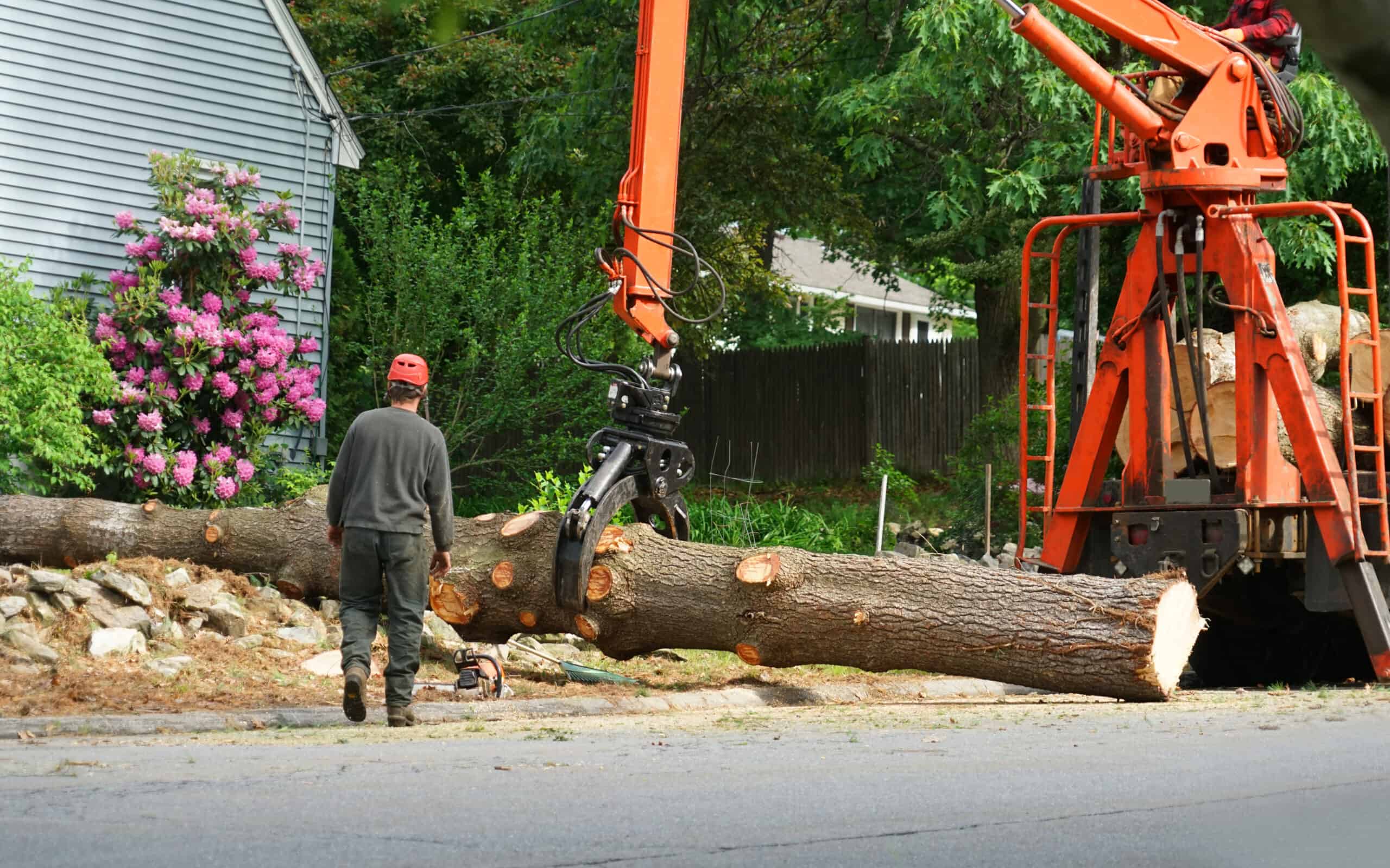
A worker wearing a red hard hat and dark clothing stands next to a large fallen tree trunk being lifted by an orange crane on a residential street. A chainsaw lies on the ground nearby, with a gray house and pink flowering shrub in the background, showcasing tree company Suffolk County expertise.

Tree Service Process

Simple Process, Professional Results Every Time

We start with a free assessment of your trees and property. Our arborist examines the trees, identifies any safety concerns, and explains what needs to be done and why. You get a detailed written estimate before any work begins.

On service day, our crew arrives with professional equipment and safety gear. We protect your landscaping, complete the tree work efficiently, and clean up thoroughly. All debris gets removed from your property.

After the work is finished, we walk through the completed job with you to make sure everything meets your expectations. If you have questions about tree care or maintenance, we answer them before we leave. You’re left with a safer property and the knowledge that the work was done right.

A person wearing gloves uses a chainsaw to cut a tree branch in a forest during autumn. Fallen leaves cover the ground, and cut logs are scattered in the background. Sunlight filters through the trees.

Ready to get started?

Explore More Services

About Long Island Best Tree Service

Get a Free Consultation

Complete Tree Care Solutions

Everything Your Trees Need Under One Roof

Our tree service covers everything from emergency removals to routine maintenance. Tree trimming keeps branches away from your house and power lines while promoting healthy growth. Complete tree removal handles trees that are diseased, damaged, or simply in the wrong place.

Emergency tree service gets fallen trees off your property quickly after storms. We understand that when a tree blocks your driveway or damages your roof, you need help fast. Our emergency response team handles urgent situations while your regular tree care keeps problems from developing in the first place.

Every job includes thorough cleanup and debris removal. We don’t just cut and run. Your property gets restored to better condition than when we arrived, and you never have to worry about disposing of branches or wood chips yourself.

A person wearing safety gear uses a chainsaw to cut through the trunk of a large tree as part of a tree removal Nassau County project. Wood chips and sawdust scatter around the base, with smaller logs on the ground. Snow patches and a forested background suggest a winter setting.

How much does tree removal cost in North Lynbrook?

Tree removal costs depend on the tree’s size, location, and complexity of the job. A small tree in an open area might cost $300-600, while large trees near structures or power lines can run $1,000-3,000 or more. The biggest factors are tree height, trunk diameter, proximity to buildings, and access for equipment. We provide free written estimates that break down all costs upfront, so you know exactly what you’re paying for. Emergency removals after storms may cost more due to urgency and hazardous conditions, but we’ll explain any additional charges before starting work.
North Lynbrook and Nassau County have specific regulations about tree removal, especially for larger trees or those in protected areas. Generally, you need permits for trees over certain sizes or in environmentally sensitive locations. The rules can be complex and change based on tree species, diameter, and location on your property. We handle permit applications when required and know the local regulations, so you don’t have to navigate the bureaucracy yourself. During our initial assessment, we’ll tell you if permits are needed and take care of the paperwork as part of our service.
Warning signs include dead or dying branches, leaves that change color out of season, fungus growing on the trunk, cracks in the bark, or branches falling without storms. You might notice the tree isn’t producing leaves normally or has areas where bark is missing or damaged. Insect infestations, root damage, or soil changes can also indicate problems. However, some tree diseases aren’t obvious to untrained eyes, and healthy-looking trees can have serious structural issues. Our arborists can assess tree health during a free consultation and explain what we find in plain language, so you understand whether treatment is possible or removal is necessary.
The terms are often used interchangeably, but there are subtle differences. Pruning typically refers to selective removal of specific branches to improve tree health, structure, or appearance. Trimming usually means cutting back overgrown branches for safety or clearance purposes. Both require understanding tree biology to avoid damaging the tree or encouraging disease. Improper cutting can weaken trees, create entry points for insects or disease, or cause branches to grow back incorrectly. Our arborists use proper techniques for both pruning and trimming, making cuts that promote healthy growth while achieving your safety and aesthetic goals.
Yes, we regularly remove trees near houses, but it requires specialized equipment and techniques. We use ropes, pulleys, and sometimes cranes to control how branches and trunk sections fall. The tree is typically dismantled piece by piece rather than felled in one piece. Our crew takes extensive precautions to protect your home, landscaping, and neighboring properties. We’ve successfully removed trees just feet from houses without damage. The key is having experienced arborists who understand rigging techniques and the right equipment for tight spaces. We’ll assess the situation and explain our approach during the free estimate.
Yes, we provide emergency tree service for storm damage, fallen trees, and hazardous situations. We understand that when a tree falls across your driveway or damages your roof, you need immediate help. Our emergency response prioritizes safety-first situations like trees on houses, blocking roads, or threatening power lines. We’re equipped to work safely around damaged power lines and unstable trees. While we respond as quickly as possible during emergencies, severe storms can create high demand, so response times may vary. We recommend calling immediately after storm damage occurs and avoiding the damaged area until professionals can assess the situation safely.