Tree Service in Elmont, NY

Safe, Professional Tree Care Done Right

Your property protected, your trees healthy, your peace of mind restored with certified arborist expertise.

Looking up at a group of tall trees with thick trunks and vibrant green foliage, one might consider the necessity of tree trimming in Suffolk County, NY. Sunlight filters through the leaves, creating a dappled effect on the branches.

Hear from Our Customers

A tree surgeon wearing protective gear, including a helmet, ear protection, and harness, uses a chainsaw to cut a large tree trunk surrounded by green ivy. The background shows a clear sky and blurred foliage. For expert assistance, trust the premier tree service Nassau County relies on.

Professional Tree Care Elmont

What You Get With Expert Tree Service

Your biggest tree problems disappear when you work with certified professionals who actually know what they’re doing. That dead oak threatening your roof gets removed safely without damaging your driveway, landscaping, or neighbor’s fence.

You stop worrying about whether that leaning maple will come down in the next storm. Professional tree trimming and maintenance keep your property safe and your trees healthy for years to come.

Your yard looks clean and professional when the job’s done. No massive piles of branches, no torn-up grass, no debris scattered around your property. Just the results you wanted with none of the headaches you were dreading.

Elmont Tree Company Experts

Local Arborists Who Know Long Island Trees

We’ve been handling tree care across Nassau County for years, and we understand exactly what Long Island’s coastal climate does to your trees. Salt air, nor’easters, and summer storms create specific challenges that require local expertise.

Our certified arborists know which trees thrive here and which ones become problems. We’re licensed, insured, and equipped to handle everything from routine maintenance to emergency storm cleanup.

You’re working with professionals who live and work in your community. We’ve seen every type of tree emergency Elmont homeowners face, and we know how to solve them efficiently.
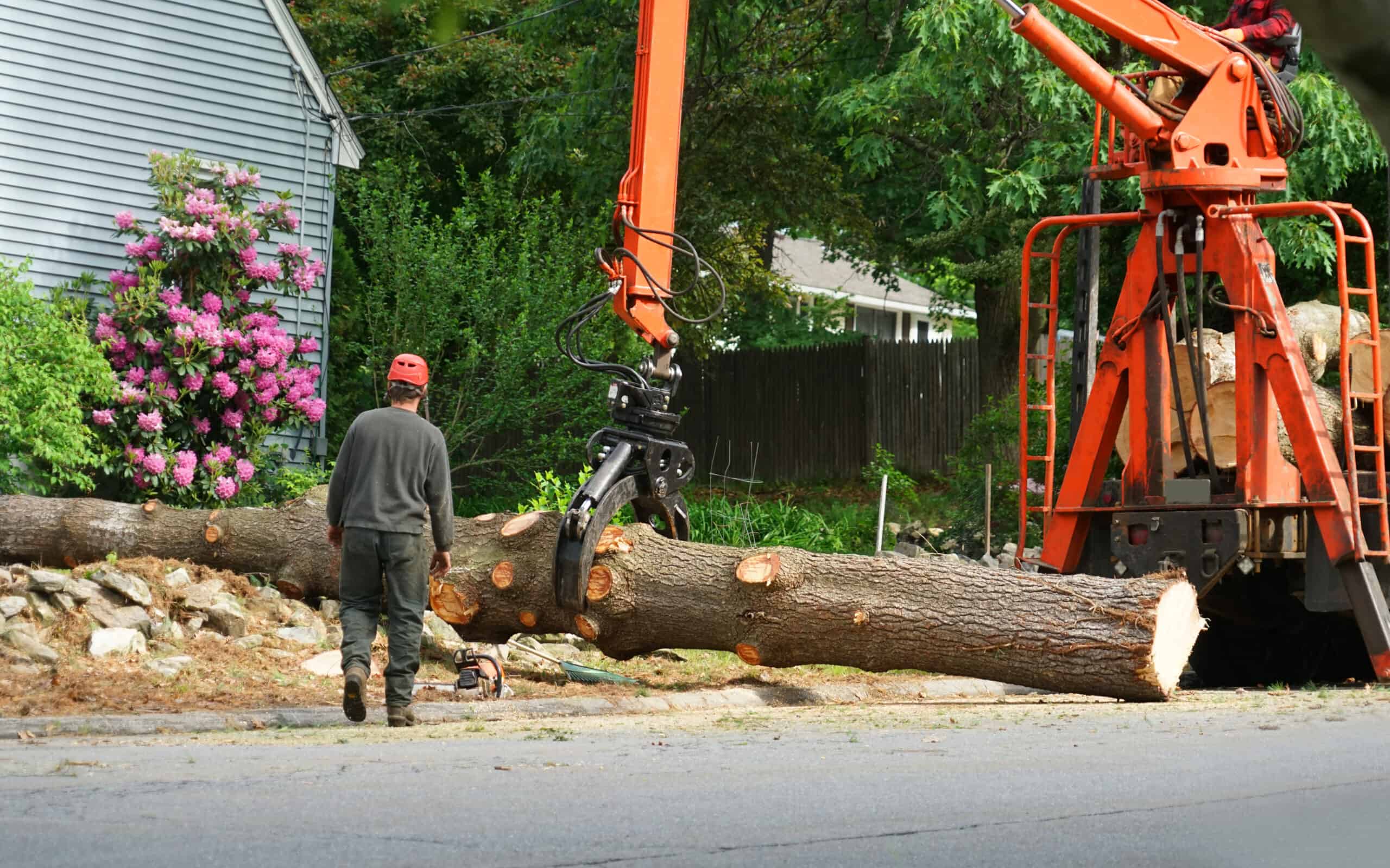
A worker wearing a red hard hat and dark clothing stands next to a large fallen tree trunk being lifted by an orange crane on a residential street. A chainsaw lies on the ground nearby, with a gray house and pink flowering shrub in the background, showcasing tree company Suffolk County expertise.

Tree Service Process Elmont

Simple Process, Professional Results Every Time

We start with a free assessment of your property and trees. Our certified arborist explains exactly what needs to be done, why it’s necessary, and gives you a clear, upfront price with no surprises.

Before any work begins, we protect your property. Tarps go down to protect landscaping, and we plan our approach to avoid damage to structures, utilities, or neighboring properties.

The actual tree work happens efficiently with professional equipment and techniques. Whether it’s precise trimming, complete removal, or emergency storm cleanup, we handle it safely and thoroughly. Complete cleanup is included – we haul away all debris and leave your property clean.

A person wearing gloves uses a chainsaw to cut a tree branch in a forest during autumn. Fallen leaves cover the ground, and cut logs are scattered in the background. Sunlight filters through the trees.

Ready to get started?

Explore More Services

About Long Island Best Tree Service

Get a Free Consultation

Complete Tree Care Services

Everything Your Trees Need Under One Company

You get comprehensive tree care from certified arborists who handle routine maintenance, emergency situations, and everything in between. Tree trimming keeps your trees healthy and prevents storm damage. Complete tree removal handles dead, diseased, or hazardous trees safely.

Emergency tree service means you’re not stuck waiting days after a storm. We respond quickly to remove fallen trees, clear blocked driveways, and eliminate safety hazards.

Our tree maintenance programs keep your property looking professional year-round. Regular pruning, health assessments, and preventive care protect your investment and avoid costly emergency situations down the road.

A person wearing safety gear uses a chainsaw to cut through the trunk of a large tree as part of a tree removal Nassau County project. Wood chips and sawdust scatter around the base, with smaller logs on the ground. Snow patches and a forested background suggest a winter setting.

How much does tree removal cost in Elmont?

Tree removal costs depend on several factors including tree size, location, and complexity of the job. A typical residential tree removal in Elmont ranges from $500 to $2,000, but larger trees near structures or power lines cost more due to the specialized equipment and expertise required. We provide free estimates that break down all costs upfront, so you know exactly what you’re paying for. Emergency removals after storms may have different pricing due to urgency and hazardous conditions. The best way to get an accurate price is to have one of our certified arborists assess your specific situation.
Permit requirements vary depending on tree size, species, and local regulations in Nassau County. Generally, you don’t need permits for dead, diseased, or hazardous trees, but some municipalities require permits for healthy trees over certain sizes. Elmont follows Nassau County guidelines, which typically require permits for trees over 6 inches in diameter. We know the local regulations and can help you determine if permits are needed for your specific situation. We can also assist with the permit application process if required, ensuring all paperwork is handled correctly before any work begins.
We prioritize emergency calls and typically respond within hours during business hours, often faster for dangerous situations like trees blocking roads or threatening structures. During major storms, response times may be longer due to high demand, but we triage calls based on safety risks. If a tree has fallen on your house, damaged power lines, or created immediate safety hazards, those calls get priority response. For urgent but non-life-threatening situations, we usually respond within 24 hours. We maintain emergency equipment and crews specifically for storm response because we know Long Island weather can create sudden, serious tree emergencies.
Most people use these terms interchangeably, but there are subtle differences in the tree care industry. Pruning typically refers to selective removal of specific branches for tree health, removing dead, diseased, or crossing branches to improve the tree’s structure and growth. Trimming often refers to cutting back overgrown branches for appearance, clearance from structures, or size control. Both require understanding tree biology to avoid damaging the tree or creating entry points for disease. Our certified arborists assess each tree individually and recommend the appropriate technique based on the tree’s species, age, health, and your specific goals for the property.
Professional tree removal minimizes damage to your property, but some impact is unavoidable with larger trees. We use protective measures like plywood, tarps, and strategic rigging to protect landscaping, driveways, and structures during removal. Small trees can often be removed with minimal lawn damage, while larger trees require equipment that may leave tire marks or compact soil. We discuss potential impacts during the estimate and plan our approach to minimize damage. Any significant lawn damage from our equipment is addressed as part of the job. The key is working with experienced professionals who have the right equipment and techniques to protect your property.
Several warning signs indicate tree disease versus normal maintenance needs. Look for dead branches, unusual leaf discoloration, fungal growth on the trunk, or sections of bark falling off. Diseased trees often have sparse foliage, early leaf drop, or visible pest infestations. Healthy trees that just need trimming typically have good overall foliage but may have some dead branches, crossing limbs, or growth too close to structures. However, many tree diseases aren’t obvious to untrained eyes, and misdiagnosis can lead to unnecessary removal or missed treatment opportunities. Our certified arborists can properly assess tree health and recommend whether trimming, treatment, or removal is the best option for your specific situation.