Tree Company in Hauppauge, NY

Your Trees Handled Right the First Time

Licensed arborists who show up when promised and clean up completely when finished.

Workers expertly handle tree trimming in Suffolk County NY, pruning large trees along a residential street. A truck with an extended crane is parked, elevating one worker in a bucket. Safety cones outline the area, and fallen branches scatter across the grass.

Hear from Our Customers

Sunlight filters through the leaves of trees in a serene garden. The well-maintained grass and gentle slopes create a peaceful, sunlit landscape.

Professional Tree Service Hauppauge

What You Get When We're Done

Your property stays safe. That’s the bottom line when you’re dealing with trees that could damage your home, block your driveway, or hurt someone you care about.

You get peace of mind knowing the job was done by licensed professionals who understand tree biology, not just guys with chainsaws. Your trees get the care they need to stay healthy longer, which means fewer emergency calls down the road.

The work site gets cleaned up completely. No branches left scattered around your yard, no wood chips in your flower beds, no excuses about “that’s how tree work goes.” You hired professionals, and your property should look like it when we leave.

Hauppauge Tree Care Experts

We've Been Doing This Right for Years

We’ve been serving Hauppauge and the surrounding Long Island area with professional tree care that homeowners can count on. We’re licensed, fully insured, and staffed with certified arborists who know the difference between a tree that needs attention and one that needs removal.

You’re not getting the cheapest guys in town, and that matters when you’re dealing with something that could damage your home or hurt your family. You’re getting professionals who show up when scheduled, do the work safely, and leave your property cleaner than we found it.
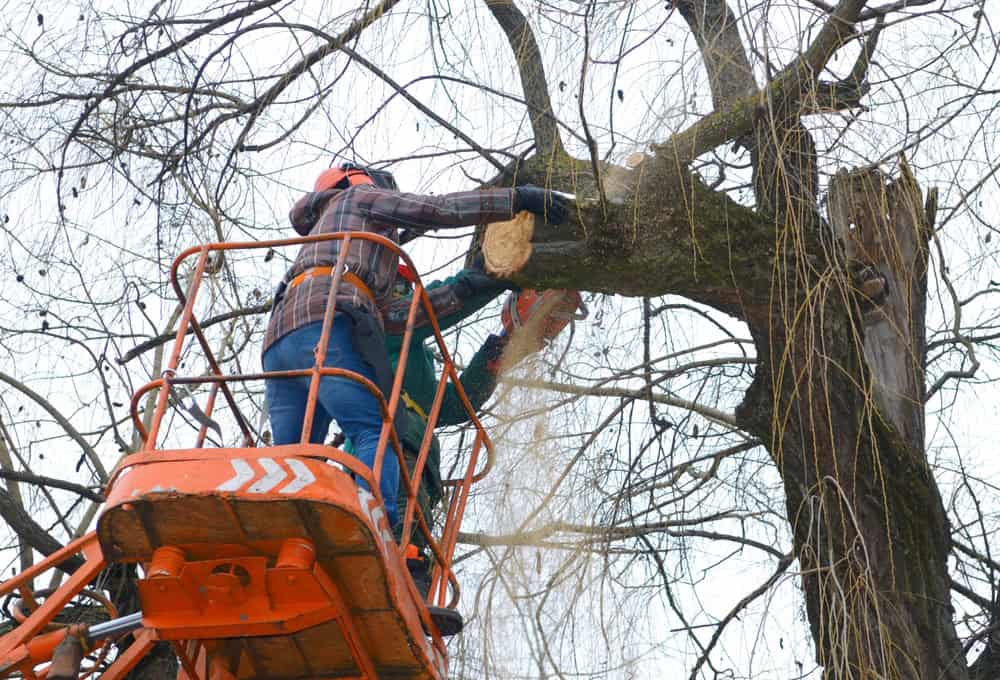
Two workers in safety gear trim branches of a tree using a chainsaw while standing on an orange hydraulic lift. The tree is bare, with no leaves, and the sky is overcast.

Tree Removal Process Hauppauge

Here's Exactly What Happens Next

First, we come out and assess what you’re dealing with. Our arborist looks at the tree’s health, its proximity to structures, and determines the safest approach for removal or trimming. You get a detailed estimate that explains exactly what needs to happen and why.

On service day, we arrive with the right equipment and crew size for your specific job. We set up protection for your landscaping and structures, then handle the tree work systematically from top to bottom. Safety protocols aren’t optional – they’re how we’ve stayed in business and kept our insurance rates reasonable.

Cleanup happens as we work, not after we’re tired. Every branch, every wood chip, every piece of debris gets removed from your property. Your lawn gets raked, your driveway gets swept, and you get your property back in better condition than when we arrived.
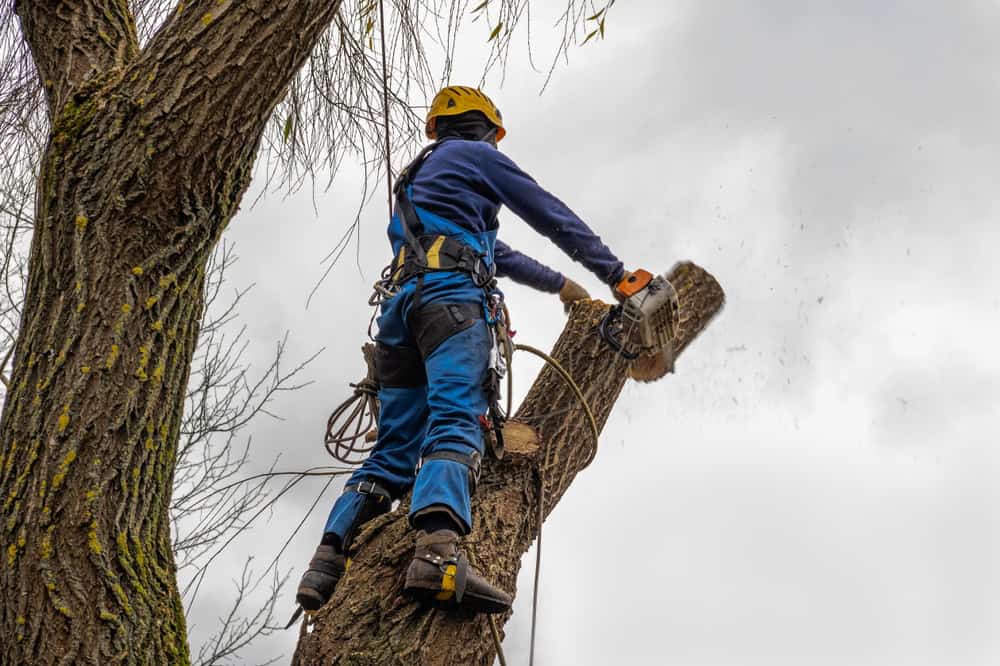
A person in safety gear is climbing a tree and using a chainsaw to cut a thick branch. The sky is overcast, and tree debris is visible in the air.

Ready to get started?

Explore More Services

About Long Island Best Tree Service

Get a Free Consultation

Complete Tree Services Hauppauge

Everything Your Trees Need Under One Company

Tree removal when it’s necessary, not just when it’s easy. Our arborists evaluate each situation individually because removing a healthy tree costs you money and property value. When removal is the right call, we handle it safely with proper equipment and techniques.

Tree trimming and pruning that actually improves tree health, not just appearance. We understand how different species respond to cutting, when to trim for optimal growth, and how to maintain the tree’s natural structure while addressing your specific concerns about clearance or safety.

Emergency tree service when storms hit Long Island. Fallen trees, hanging branches, and blocked driveways don’t wait for business hours. We respond quickly to emergency calls because we know that every hour a tree blocks your driveway or threatens your roof matters to you and your family.

A person wearing a black glove uses a green-handled lopper with orange grips to cut a branch from a tree against a clear blue sky.

How much does tree removal cost in Hauppauge?

Tree removal costs depend on the tree’s size, location, and complexity of the job. A small tree in an open area might cost $300-600, while large trees near structures or power lines can run $1,500-3,000 or more. We provide detailed written estimates that break down exactly what you’re paying for – labor, equipment, cleanup, and disposal. The estimate includes everything, so you won’t get surprised with additional fees after the work is done. Emergency removals typically cost more due to the urgency and after-hours scheduling, but we’ll explain all costs upfront before starting any work.
Hauppauge and most Long Island municipalities have specific regulations about tree removal, especially for larger trees or those in protected areas. Generally, you can remove dead, diseased, or hazardous trees without permits, but healthy trees over certain sizes may require approval. We’re familiar with local regulations and can help you determine if permits are needed for your specific situation. If permits are required, we can guide you through the application process or recommend when it’s worth consulting with the town directly. It’s always better to check first rather than face potential fines or having to replant later.
Dead trees show specific signs that trained arborists can identify even when other trees look dormant. Look for bark that’s falling off in large sections, branches that snap easily when bent, or fungus growing from the trunk or major branches. Dead trees often have woodpecker holes or other pest damage that healthy dormant trees don’t show. The scratch test works too – scrape a small area of bark with your fingernail. Living trees show green underneath, while dead trees show brown or gray. If you’re unsure, have a certified arborist evaluate the tree because dead trees become safety hazards quickly, especially during storms.
Most people use these terms interchangeably, but there are technical differences that matter for your tree’s health. Pruning focuses on the tree’s health – removing dead, diseased, or damaged branches, improving air circulation, and encouraging proper growth patterns. Trimming is more about appearance and clearance – cutting branches away from buildings, power lines, or to maintain a specific shape. Good tree care combines both approaches based on what your specific tree needs. We evaluate each tree individually because improper cutting can damage tree health, create entry points for disease, or cause dangerous branch failure later. The goal is always long-term tree health, not just immediate appearance.
Most healthy mature trees benefit from professional evaluation every 2-3 years, with maintenance as needed based on the species, age, and growing conditions. Younger trees might need annual attention to establish proper structure, while older trees may need more frequent monitoring for health issues or safety concerns. Trees near structures, power lines, or high-traffic areas should be checked annually for safety reasons. After major storms, all trees should be inspected for damage that might not be immediately obvious. The key is catching problems early when they’re less expensive to address and before they become safety hazards or require tree removal.
Yes, we carry full licensing and comprehensive insurance coverage required for professional tree work in New York State. This includes general liability insurance that protects your property if something goes wrong, workers’ compensation for our crew members, and proper licensing for commercial tree operations. We can provide proof of insurance before starting any work, and our coverage is current and adequate for the scope of services we provide. This protection matters because tree work involves significant risks to property and people. Hiring uninsured tree services can leave you liable for injuries or property damage that should be covered by the contractor’s insurance.